How preserving relationships, history, and context changes operational decision-making
Over the past few weeks, we’ve shared a series of short posts showing how UnitTrak handles the realities of managing multi-unit businesses.
Not features in isolation—but how real operational complexity actually plays out over time.
We looked at how to:
See what your unit portfolio looked like at a prior point in time
Understand the full lifecycle and history of a unit
Retrieve critical documents in context, when you need them
Track lease options and renewal deadlines without relying on memory or spreadsheets
Individually, each capability solves a familiar problem.
Together, they point to something bigger.
UnitTrak isn’t just a place to store data.
It’s a system designed to preserve relationships, history, and accountability as your portfolio grows and changes.
Because in multi-unit businesses, the hardest questions aren’t:
“What do we have today?”
They’re:
What was true then?
What changed—and why?
What depends on what?
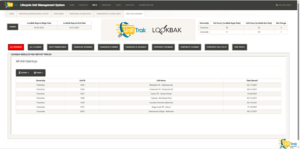
(Screenshot below shows a LookBak snapshot of a portfolio at a prior point in time.)
That’s the gap UnitTrak was built to close.
We’ll keep sharing practical examples of how UnitTrak makes day-to-day portfolio management easier.
This is part of an ongoing series showing how UnitTrak handles real-world complexity without spreadsheets.