How Preserved History Turns Data Into a Usable Record
Over the past few weeks, I’ve shared several examples of the kinds of practical, day-to-day data challenges that show up regularly in multi-unit organizations. These include:
- Reconstructing historical records for FDD updates
- Staying ahead of permit and license deadlines
- Understanding what’s actually driving performance across locations
- Managing openings, closures, relocations, and ownership changes over time.
On the surface, these may look like separate operational issues. In practice, they usually have the same root cause. They grow out of a lack of structure as information accumulates across departments, files, and time.
Multi-unit organizations rarely struggle because they don’t have data. They struggle because their data isn’t preserved in a way that maintains context, history, and connection.
Spreadsheets, shared folders, and institutional memory can work for a while, but as portfolios grow and change, assembling accurate records becomes more time-consuming and prone to error. What leadership teams often need isn’t more data. They need a preserved historical record, clear visibility across units, and reliable context that reflects the way the portfolio has evolved over time.
When information is maintained in a single, structured place, reporting becomes more reliable, historical questions are easier to answer, and day-to-day decision-making is less dependent on manual reconstruction.
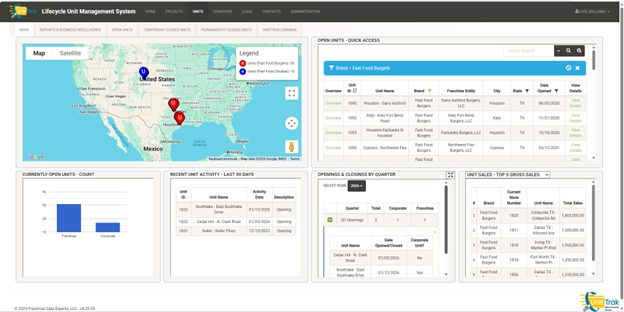
(Screenshot below shows a consolidated portfolio view that brings operational and historical context into one place.)
This is the philosophy behind UnitTrak’s design – to preserve relationships, timelines, and unit history in a way that supports operational clarity as organizations grow and change.
In multi-unit environments, complexity is inevitable. Lack of clarity doesn’t have to be.
Structure is what turns accumulated data into a stable, usable record over time.